The modern diet is awash in sugar. From processed foods to sugary drinks, added sugars contribute significantly to various health concerns, including weight gain, type 2 diabetes, and heart disease. Consumers are increasingly seeking healthier alternatives, leading to a surge in interest in natural sweeteners like coconut sugar. But is this seemingly healthier option truly superior to regular table sugar (sucrose)?
This article delves into the comparison between coconut sugar and regular sugar, examining their nutritional profiles, glycemic impact, and potential health benefits. We’ll explore the scientific evidence to help you make informed choices about your sugar consumption. Read on to discover the truth behind this popular sweetener.
Coconut sugar is a natural sweetener derived from the sap of coconut palm blossoms. Unlike refined white sugar, which undergoes extensive processing, coconut sugar retains some of its natural nutrients. This minimally processed nature contributes to its slightly different nutritional profile compared to regular sugar.
The production process involves collecting the sap, boiling it down to reduce moisture content, and then drying it to create the granular sugar we commonly use. This process preserves some of the minerals and vitamins present in the original sap, although the quantities are still relatively small.
Let’s compare the nutritional content of coconut sugar and regular sugar per 100g serving:
| Nutrient | Coconut Sugar (approx.) | Regular Sugar (sucrose) |
|---|---|---|
| Calories | 380 | 387 |
| Carbohydrates | 92g | 99.9g |
| Fiber | 3.5g | 0g |
| Potassium | 350mg | 0mg |
| Iron | 1mg | 0mg |
| Zinc | 1mg | 0mg |
As you can see, coconut sugar contains small amounts of fiber, potassium, iron, and zinc, while regular sugar is essentially pure sucrose. However, it’s crucial to remember that these nutrient amounts are still relatively low, and coconut sugar should not be considered a significant source of these nutrients in a balanced diet.
The glycemic index (GI) measures how quickly a carbohydrate-containing food raises blood sugar levels. Foods with a low GI cause a slower, more gradual rise in blood sugar, while high-GI foods lead to a rapid spike. Coconut sugar generally has a lower GI than regular sugar, although the exact values can vary depending on the processing methods.
A lower GI can be beneficial for individuals with diabetes or those seeking to manage their blood sugar levels. However, it’s important to note that even with a lower GI, coconut sugar is still a source of sugar and should be consumed in moderation.
While coconut sugar isn’t a miracle food, some studies suggest potential health benefits compared to regular sugar:
It’s crucial to understand that these benefits are relatively modest and shouldn’t overshadow the fact that coconut sugar is still a source of added sugar.
Despite its perceived health advantages, coconut sugar also has some drawbacks:
The question of whether coconut sugar is “better” than regular sugar is complex. While it offers a slightly lower glycemic index and contains trace amounts of minerals, it remains a source of added sugar. Therefore, it shouldn’t be considered a “health food” and should be consumed in moderation as part of a balanced diet.
The most significant advantage of coconut sugar lies in its lower glycemic index, which can be beneficial for individuals managing their blood sugar levels. However, this benefit shouldn’t overshadow the importance of overall dietary habits and portion control. Both coconut sugar and regular sugar should be consumed sparingly.
The choice between coconut sugar and regular sugar ultimately depends on individual dietary needs and preferences. While coconut sugar offers some potential advantages, such as a lower glycemic index and trace minerals, it’s crucial to remember that it’s still a source of added sugar and should be consumed in moderation. A balanced diet, regular exercise, and mindful sugar consumption are key to maintaining good health.
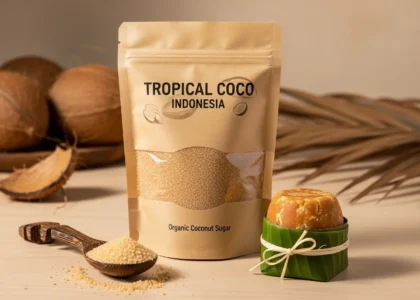
Experience the difference of organic coconut sugar. Tropical Coco Indonesia offers superior quality, ethically sourced, and globally shipped coconut sugar for a healthier, sweeter life.