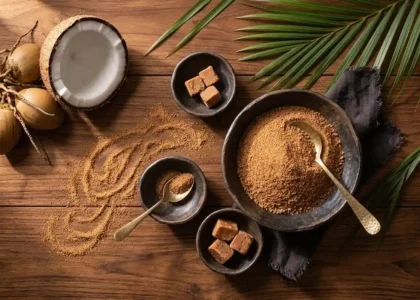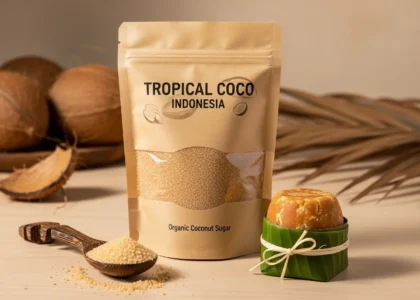
If you’re following a ketogenic diet, coconut sugar is generally not keto friendly. Although it’s often marketed as a healthier alternative to refined sugar, coconut sugar contains nearly the same amount of digestible carbohydrates. Its lower glycemic index may lead to a slower rise in blood sugar, but it does not make the sugar low in carbs or suitable for maintaining ketosis. For most people on keto, replacing coconut sugar with a low-carb sweetener is the more practical choice.
The confusion comes from the word coconut. Many keto-friendly foods, such as coconut oil, coconut milk, and coconut flour, fit perfectly into a low-carb lifestyle. Coconut sugar is different. It is produced from the sap of coconut palm flowers, and the final product behaves much more like regular sugar than a keto ingredient.
Before adding coconut sugar to your coffee, smoothies, or baked goods, it’s worth understanding how it fits into a ketogenic diet and why nutrition experts often separate low glycemic from low carbohydrate.
One of the biggest misconceptions is assuming that anything derived from coconuts must be keto friendly.
Coconut sugar is made by collecting the sap from the flower buds of the coconut palm. The sap is gently heated until most of its water evaporates, leaving behind golden-brown crystals with a mild caramel flavor.
Unlike coconut oil or unsweetened coconut flakes, coconut sugar contains very little fat. Instead, it is primarily made up of sucrose, along with small amounts of glucose and fructose. From a nutritional standpoint, it functions much closer to traditional sugar than other coconut-based ingredients commonly used in ketogenic recipes.
Another reason coconut sugar is frequently misunderstood is the growing popularity of natural sweeteners.
Many consumers associate words like organic, unrefined, or natural with healthier nutrition. While coconut sugar undergoes less processing than refined white sugar, these labels say nothing about its carbohydrate content.
The ketogenic diet is based on limiting carbohydrates enough to encourage the body to produce ketones for energy. Whether a sugar is natural or refined has very little impact on that metabolic process.
In other words, a natural sugar can still interrupt ketosis if it contributes too many digestible carbohydrates.
Coconut sugar is often promoted for having a lower glycemic index (GI) than white sugar.
That statement is generally accurate, but it can also be misleading when discussed without context.
The glycemic index measures how quickly carbohydrates raise blood glucose after eating. Ketogenic diets focus on how many carbohydrates are consumed throughout the day.
These are two completely different measurements.
A sweetener with a moderate GI can still provide enough carbohydrates to exceed a keto user’s daily limit. That’s why many registered dietitians recommend evaluating both carbohydrate intake and serving size instead of relying solely on glycemic index claims.
The easiest way to determine whether a food fits into a ketogenic diet is by looking at its carbohydrate content rather than its marketing claims.
Below is the approximate nutrition profile of coconut sugar.
| Nutrient | Per Teaspoon (4 g) | Per Tablespoon (12 g) |
|---|---|---|
| Calories | 15 | 45 |
| Total Carbohydrates | 4 g | 12 g |
| Sugars | 4 g | 12 g |
| Fiber | 0 g | 0 g |
| Net Carbohydrates | 4 g | 12 g |
While the exact values vary slightly between brands, the overall picture remains consistent. Almost every gram of coconut sugar is a digestible carbohydrate.
For someone following a standard ketogenic diet with a daily carbohydrate target of around 20–50 grams of net carbs, just one tablespoon of coconut sugar can consume a significant portion of that allowance.
This is one reason keto recipes rarely include coconut sugar, even in small amounts. It simply provides too many carbohydrates compared with modern keto-friendly sweeteners.
Another important point is that coconut sugar contains trace amounts of minerals such as potassium, iron, zinc, and calcium. These nutrients are real, but the quantities are relatively small. You would need to consume far more coconut sugar than a ketogenic diet allows before those minerals become nutritionally significant.
From our perspective as a coconut sugar producer, this distinction is important. Coconut sugar should not be promoted as a “health food” that fits every dietary pattern. Instead, it should be viewed as a minimally processed alternative to refined sugar with its own unique flavor profile and culinary advantages. That honest positioning helps consumers choose the right sweetener based on their nutritional goals rather than marketing claims.
For individuals prioritizing ketosis, the carbohydrate cost outweighs the modest mineral content. For people who are not following a ketogenic lifestyle, however, coconut sugar can still be an appealing ingredient thanks to its subtle caramel notes and less refined production process.
Understanding how coconut sugar influences ketosis requires looking beyond calories alone. Ketosis is a metabolic state where the body relies primarily on fat instead of carbohydrates for energy. To stay in ketosis, carbohydrate intake must remain consistently low enough to prevent frequent spikes in blood glucose and insulin.
Because coconut sugar is composed almost entirely of digestible carbohydrates, it works against that goal.
Every time you consume carbohydrates, your digestive system breaks them down into glucose. The body responds by releasing insulin to help move that glucose into cells.
Coconut sugar may produce a slower blood glucose response than refined white sugar because of its different sugar composition and the presence of small amounts of inulin. However, the difference is often overstated.
What matters most for ketosis is that coconut sugar still supplies a substantial amount of glucose-producing carbohydrates. Even if blood sugar rises more gradually, the body still recognizes those carbohydrates as fuel, making ketone production less of a priority.
This is why many ketogenic nutrition guides emphasize total carbohydrate intake rather than relying on glycemic index alone.
There is no universal answer because ketosis depends on several individual factors, including:
For example, someone who has maintained ketosis for several months and exercises regularly may tolerate a slightly higher carbohydrate intake than someone who has just started the diet.
However, one tablespoon of coconut sugar already provides about 12 grams of net carbohydrates. For a person aiming to stay below 20 grams per day, that single serving could consume more than half of the daily allowance before accounting for vegetables, dairy products, nuts, or other carbohydrate sources.
Rather than asking whether one serving will immediately stop ketosis, a better question is whether it is an efficient use of your carbohydrate budget.
In most cases, the answer is no.
One aspect rarely discussed is the concept of carbohydrate opportunity cost.
On keto, every gram of carbohydrate matters because your daily budget is limited. Choosing coconut sugar means giving up carbohydrates that could otherwise come from more nutrient-dense foods.
For roughly the same carbohydrate amount found in one tablespoon of coconut sugar, you could instead enjoy foods that contribute fiber, vitamins, healthy fats, or protein while supporting satiety.
This makes coconut sugar a relatively expensive choice from a nutritional perspective for anyone committed to ketogenic eating.
Not all sweeteners behave the same way in the body. Some contribute significant carbohydrates, while others provide sweetness with little or no effect on blood glucose.
The comparison below highlights the practical differences.
| Sweetener | Keto Friendly | Net Carbs | Blood Sugar Impact | Best For |
|---|---|---|---|---|
| Coconut Sugar | No | High | Moderate | General baking, caramel flavor |
| White Sugar | No | High | High | Traditional recipes |
| Honey | No | High | High | Natural sweetening |
| Maple Syrup | No | High | Moderate to High | Pancakes, baking |
| Erythritol | Yes | Nearly Zero | Minimal | Baking, beverages |
| Monk Fruit | Yes | Zero | None | Drinks, desserts |
| Allulose | Yes | Nearly Zero | Minimal | Sauces, ice cream |
| Stevia | Yes | Zero | None | Coffee, tea, smoothies |
The key difference is that keto-friendly sweeteners provide sweetness without delivering meaningful amounts of digestible carbohydrates.
Some, such as erythritol and allulose, also behave more like sugar during baking, making them popular choices for low-carb recipes. Monk fruit and stevia are significantly sweeter than sugar, so only small quantities are needed.
For people whose primary goal is maintaining ketosis, these alternatives generally offer a much better balance between taste and carbohydrate intake.
This question deserves a balanced answer because the comparison depends on what “better” actually means.
If the discussion focuses only on processing methods, coconut sugar has some advantages. It undergoes less refining than conventional white sugar and naturally contains trace amounts of minerals such as potassium, zinc, iron, and calcium.
It also offers a rich caramel flavor that many bakers prefer over the neutral sweetness of refined sugar.
However, these benefits should not be exaggerated.
The mineral content is relatively small, and obtaining meaningful nutritional value from coconut sugar would require consuming far more sugar than most healthy diets recommend. From a carbohydrate perspective, coconut sugar and white sugar remain surprisingly similar.
For ketogenic diets, that distinction is especially important.
A lower glycemic index does not offset the high carbohydrate content. Both sweeteners can make it difficult to maintain nutritional ketosis when consumed regularly.
From our experience working with coconut sugar, we believe its greatest strength is not that it replaces every sweetener. Instead, it serves consumers who want a less refined sugar with a distinctive flavor for balanced diets.
For keto followers, honesty matters more than marketing. Coconut sugar is an excellent natural sweetener for many recipes, but it is not the right choice when maintaining ketosis is the priority.
Saying that coconut sugar is not keto friendly does not mean it has no place in a healthy diet. The best sweetener depends on an individual’s nutritional goals, eating pattern, and personal preferences.
From our perspective, coconut sugar is better viewed as a natural alternative to refined sugar, not as a universal replacement for every dietary lifestyle.
It may be a suitable choice for the following groups.
Many consumers want to reduce their dependence on highly refined ingredients without completely eliminating sweetness from their diet.
Because coconut sugar is minimally processed and offers a more complex caramel flavor, many home cooks find they can achieve satisfying sweetness with recipes that emphasize flavor rather than excessive sugar.
While it should still be consumed in moderation, coconut sugar can fit into a balanced eating pattern that is not focused on carbohydrate restriction.
Unlike white sugar, coconut sugar contributes more than sweetness.
Its subtle notes of caramel, butterscotch, and toasted brown sugar make it popular for recipes such as:
Many professional bakers use coconut sugar because it adds depth of flavor rather than simply increasing sweetness.
Another common source of confusion is the overlap between paleo and keto.
Many paleo eating plans allow natural sweeteners like coconut sugar because they emphasize minimally processed foods rather than carbohydrate restriction.
Ketogenic diets, however, prioritize maintaining ketosis through strict carbohydrate control.
As a result, a sweetener can be acceptable for paleo while still being unsuitable for keto.
Understanding this distinction helps avoid one of the most common nutrition myths surrounding coconut sugar.
If maintaining ketosis is your primary goal, choosing a sweetener with little or no digestible carbohydrates is a much more practical approach.
Rather than recommending one product for every situation, it helps to match the sweetener with the intended use.
Stevia and monk fruit are excellent choices because they dissolve easily and have virtually no impact on blood glucose.
They provide sweetness without adding meaningful carbohydrates to your daily intake.
Erythritol and allulose are often preferred because they behave more like traditional sugar during baking.
They provide bulk, improve texture, and produce results that are generally closer to conventional baked goods than highly concentrated sweeteners.
Many commercial keto recipes also combine erythritol with monk fruit to create a more balanced sweetness profile.
Allulose has become increasingly popular because it caramelizes more effectively than many sugar substitutes.
It works well in:
Selecting the right sweetener often produces better results than trying to force one ingredient into every recipe.
Some people following a lazy keto approach may occasionally include a small amount of coconut sugar if it fits within their daily carbohydrate target. However, because coconut sugar is almost entirely digestible carbohydrate, it can quickly consume a large portion of that allowance. For most keto followers, low-carb sweeteners remain the more practical option.
No. Despite differences in processing and flavor, coconut sugar contains a very similar amount of digestible carbohydrates to regular table sugar. The nutritional gap is much smaller than many marketing claims suggest.
Research suggests coconut sugar may have a lower glycemic index than refined sugar, meaning blood glucose may rise more gradually in some individuals. However, it still supplies a significant amount of carbohydrates and should not be considered a low-carb sweetener.
Yes. Many paleo diets allow coconut sugar because it is minimally processed, while ketogenic diets generally avoid it because of its high carbohydrate content. The difference lies in each diet’s primary objective.
For people aiming to maintain nutritional ketosis, monk fruit and stevia are among the best naturally derived options because they provide sweetness without contributing significant carbohydrates. Erythritol and allulose are also widely used for baking and cooking due to their sugar-like performance.
Coconut sugar is not keto friendly.
Although it is less refined than white sugar and naturally contains trace amounts of minerals, nearly all of its calories come from digestible carbohydrates. Those carbohydrates can make it difficult to remain in nutritional ketosis, especially for individuals following a standard ketogenic diet with a daily limit of 20–50 grams of net carbs.
That does not diminish coconut sugar’s value. It remains an excellent choice for consumers who prefer a minimally processed sweetener with a rich caramel flavor and who are not restricting carbohydrates. Used appropriately, it can be part of a balanced diet and deliver a flavor profile that refined sugar cannot easily replicate.
The key is choosing the right sweetener for the right dietary goal.
If your goal is ketogenic eating, low-carb alternatives such as monk fruit, stevia, erythritol, or allulose are the better fit.
If your goal is replacing refined sugar while enjoying a natural sweetener with distinctive taste, coconut sugar remains a worthwhile option—as long as you understand that natural does not automatically mean keto.