Are coconut sugar and palm sugar interchangeable? Many people use these terms interchangeably, believing they are the same product. This confusion stems from the similar appearance and origins of both sweeteners, as they are both derived from palm trees. However, several key differences distinguish coconut sugar and palm sugar.
Understanding these differences is crucial for making informed choices about your diet and recipes. This article will delve into the distinct characteristics of coconut sugar and palm sugar, exploring their unique production processes, nutritional compositions, and culinary applications. Read on to uncover the truth about these two popular sweeteners and learn how to use them effectively.
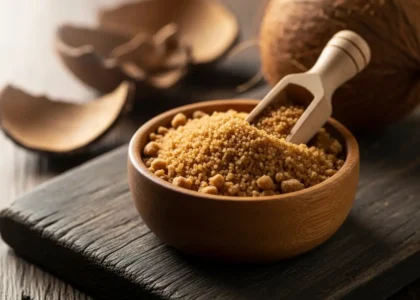
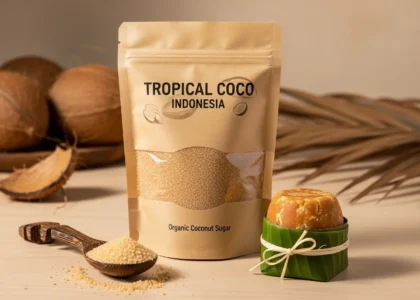
Coconut sugar is derived from the sap of the coconut palm tree. Harvesters make incisions in the flower buds of the coconut palm, collecting the sweet, flowing sap. This sap is then heated to evaporate the water content, resulting in a granulated sugar.
Coconut sugar has a slightly caramel-like flavor and is often touted as a healthier alternative to refined sugar. It contains small amounts of nutrients like potassium, zinc, iron, and inulin, a prebiotic fiber. However, it’s important to note that these nutrients are present in relatively small quantities.
Palm sugar, on the other hand, is made from the sap of various palm trees, but most commonly the Arenga pinnata (sugar palm) or Borassus flabellifer (Palmyra palm). Similar to coconut sugar production, the sap is collected and heated to create a granulated sugar.
Palm sugar’s flavor profile can vary depending on the specific palm tree used, ranging from a mild sweetness to a rich, molasses-like taste. It also contains trace amounts of minerals, but like coconut sugar, these are not present in significant amounts.
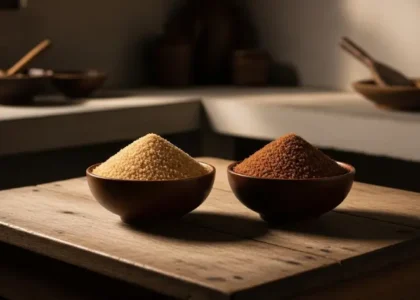
While both are derived from palm trees, coconut sugar and palm sugar have distinct characteristics:
While often confused, coconut sugar and palm sugar are distinct sweeteners with different origins, nutritional profiles, and flavor characteristics. Understanding these differences allows you to make informed decisions about which sweetener best suits your needs and preferences, whether for baking, cooking, or adding to beverages.